Pre-Trip Car Checklist: 12 Quick Checks Before You Go
Fifteen minutes in the driveway beats an hour on the shoulder.
If you are driving for Thanksgiving, the car deserves about as much attention as the pie. Most of what keeps a trip from going sideways is basic and quick to check, and you do not need to be a mechanic to do it.
Quick answer: in about 15 minutes, check tire pressure, tread and the spare, look at oil, coolant and washer fluid, test every light, check the wipers, look at the battery terminals, and make sure the emergency kit is in the trunk. Ask a professional about the brakes and a battery test. Check tire pressure when the tires are cold and use the number on the sticker inside the driver's door, as NHTSA advises.
Tires: pressure, tread and the spare
Tires come first because they are the only part of the car touching the road. This is where three of the 12 checks live.
Check 1: tire pressure
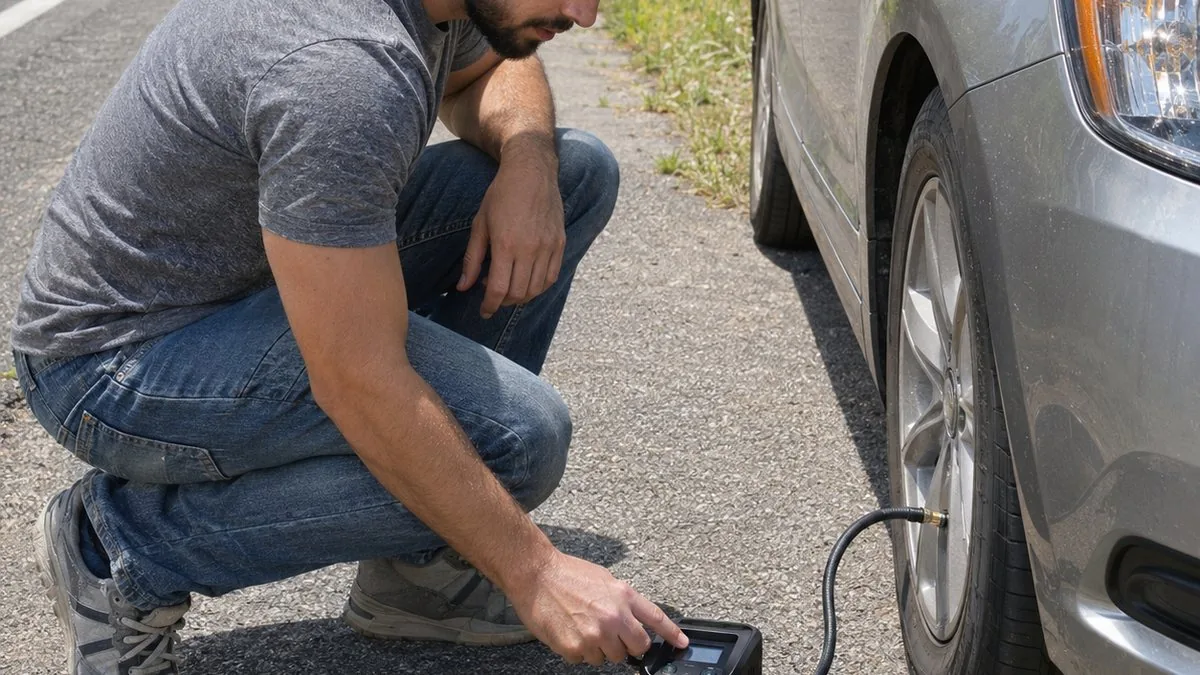
NHTSA says tire pressure drops as the outside temperature drops, so a pressure that was right in September may be low now. Fill each tire to the vehicle maker's recommended pressure. You will find it in the owner's manual and on a label on the driver's side door frame. Do not use the number on the tire itself. NHTSA explains that number is the most the tire can hold, not what your car needs.
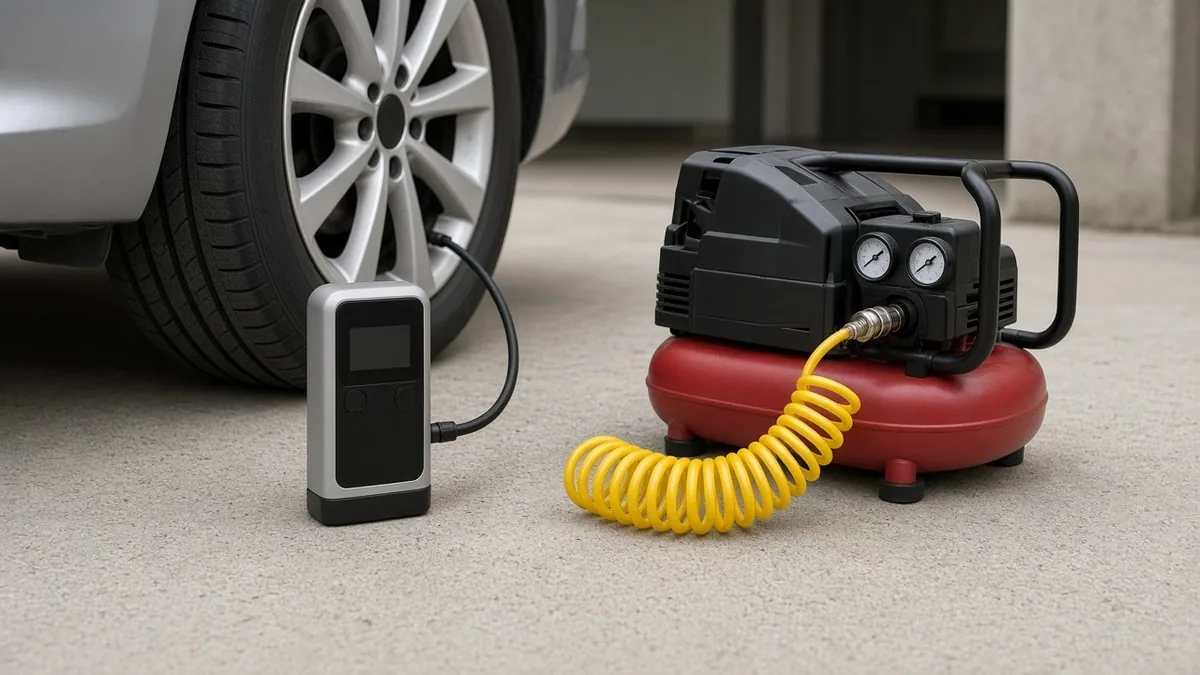
Check when the tires are cold. NHTSA defines that as not driven on for at least three hours, so do this before you load up and head out, not at the first gas station. A simple tire pressure gauge in the glovebox makes this a quick job. If a tire is low, a portable tire inflator lets you top it up at home. Our tire emergency kit checklist covers what else to keep for tire trouble.
If your dashboard light is on, read our post on the tire pressure light in cold weather first.
Check 2: tread and tire condition
NHTSA says tread should be at least 2/32 of an inch on every tire, and gives the penny test: place a penny in the tread with Lincoln's head upside down. If you can see the top of his head, you need new tires. AAA uses a quarter: insert it upside down in the tread, and if you can see the top of Washington's head, AAA says it is time for new tires. Also look for cuts, gouges and bulges in the sidewall. Uneven wear across a tire can mean it needs rotating or the wheels need an alignment, and AAA says to have a professional look at that.
Check 3: the spare
AAA says to inspect the spare as well, if your car has one. A flat spare is a bad surprise, and it is easy to check while you are already holding the gauge.
Fluids: oil, coolant and washer fluid
AAA says to check that engine oil, coolant, and brake, transmission and power steering fluids are at the correct levels. When you add any fluid, use products that meet the specifications in your owner's manual. Adding the wrong type can lead to costly repairs, a AAA Car Care expert warns.
Check 4: engine oil
A AAA Car Care expert says the first look at the dipstick tells you little. Wipe it, push it all the way back in, pull it out again and read it the second time. Dipsticks differ, so check the owner's manual for what a good level looks like on yours.
Check 5: coolant and other fluids
NHTSA says to make sure you have enough coolant and that it meets the manufacturer's specifications, and to check the cooling system for leaks. Brake, transmission and power steering fluids are on AAA's list too, but AAA notes that newer cars may have a sealed automatic transmission with no dipstick, and electric power steering that may not use fluid.
Check 6: washer fluid
Fill the reservoir. NHTSA notes you can go through a lot of washer fluid in a single snowstorm, and for winter it suggests a "winter" fluid with de-icer. Test the nozzles.
Lights and wipers
Both take a few minutes and both are about seeing and being seen.
Check 7: lights
NHTSA says to check your headlights, brake lights, turn signals, emergency flashers and interior lights. AAA adds the rear license plate light, which is easy to overlook. Brake lights are hard to see from the driver's seat, so ask a family member to watch from behind while you press the pedal.
Check 8: wipers
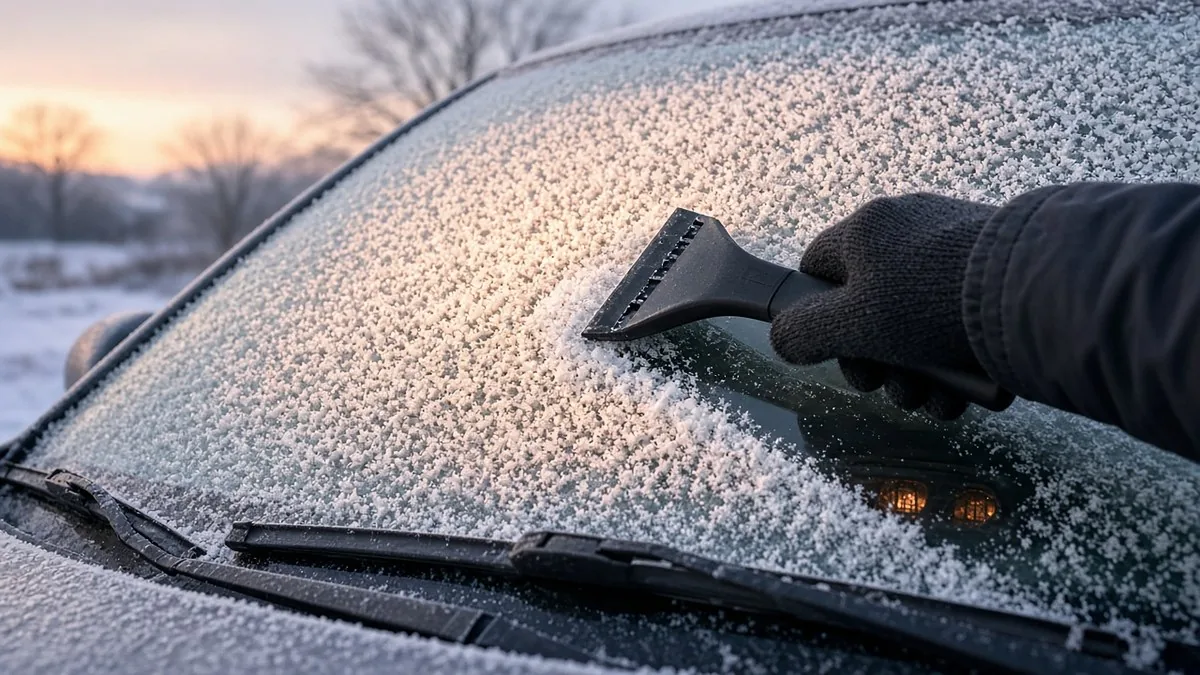
AAA says rubber wiper blades wear out over time, and to replace them if they streak or do not clear the glass. A AAA Car Care expert suggests lifting the blade and feeling the edge for smoothness, then putting it back to make sure the whole blade touches the glass. Our guide to defrosting a windshield has more for cold mornings.
Battery and charging
Check 9: battery
AAA says to make sure the battery cable connections are clean and tight and the hold-down hardware is secure. AAA also says to have a service professional test the battery for remaining capacity, and that AAA members can request a free battery check. NHTSA adds that cold weather means engines take more battery power to start, and recommends a mechanic check the battery, charging system and belts.
Free every Sunday
Get the free Sunday Roundup
Trucking headlines, road stories, useful gear finds and a few laughs, in your inbox every Sunday.
A portable jump starter is a sensible backup for the trunk, and our guide on what size jump starter you need helps you choose one.
Brakes: when to ask a professional
Check 10: brakes
This is the one check I would not do alone in the driveway. AAA says that if you hear a grinding sound or feel a vibration when you brake, take the car to a repair shop for an inspection. A AAA Car Care expert says brake inspections before a road trip are better left to a professional. Brake work is not the place for guessing.
Gas, phone and route
Check 11: fuel, phone and route
NHTSA advises keeping your gas tank close to full whenever possible. It also says to review directions and maps before you go, even if you use a GPS, and to tell others your route and expected arrival time. On longer trips, plan time to stretch, eat and swap drivers or rest if you feel drowsy.
Keep a phone charger in the car. NHTSA lists a cell phone and a car charger in its stock-your-vehicle list. An Anker portable charger covers you when the car is off.
One more free check: NHTSA's recall look-up tool lets you enter your VIN or license plate to see if your car has an unrepaired safety recall. NHTSA says recall repairs are free.
Emergency gear to carry
Check 12: emergency kit
AAA recommends a flashlight with fresh batteries, first-aid supplies, drinking water, non-perishable snacks for people and pets, booster cables, flares or reflectors, a rain poncho, a basic tool kit, duct tape, gloves and shop rags or paper towels. For cold weather, NHTSA adds a snow shovel, broom and ice scraper, sand or kitty litter for traction, and blankets.
A flashlight is worth testing before you go. For a longer winter list, see our winter car emergency kit guide, and if you ever do get stuck, read what to do if your car is stuck in snow.
The 12-check list in one place
- Tire pressure: cold tires, door sticker number.
- Tread and sidewalls: penny test, look for cuts and bulges.
- Spare tire: check it too.
- Engine oil: read the dipstick twice.
- Coolant and other fluids: right level, right type.
- Washer fluid: full, nozzles spraying.
- Lights: headlights, brake lights, turn signals, flashers, plate light.
- Wipers: smooth edge, full contact, no streaks.
- Battery: clean tight terminals, professional test if it is slow to start.
- Brakes: grinding or vibration means a shop visit.
- Fuel, phone, route: near-full tank, charger, route shared.
- Emergency kit: flashlight, water, snacks, first aid, jumper cables.
For what to pack for the people in the car, use our road trip packing list.
Gear mentioned in this post
- Tire pressure gauge: for the cold-tire check before you leave.
- Portable tire inflator: to top up a low tire at home.
- Portable jump starter: a backup if the battery will not start the car.
- Anker portable charger: keeps your phone charged when the car is off.
- Flashlight: for the emergency kit, with fresh batteries.
FAQ
What should I check on my car before a long road trip?
Start with tire pressure, tread and the spare, then check oil, coolant, washer fluid, lights, wipers and the battery. Have a professional look at the brakes, and pack an emergency kit. AAA and NHTSA both list these as the basics.
How do I check my tire pressure before a trip?
Check when the tires are cold, meaning the car has not been driven for at least three hours, according to NHTSA. Use the pressure on the sticker inside the driver's door or in the owner's manual, not the number printed on the tire.
What should I keep in my car for a long drive?
AAA suggests a flashlight with fresh batteries, first-aid supplies, drinking water, non-perishable snacks, jumper cables, flares or reflectors, a basic tool kit, gloves and a rain poncho. In cold weather, NHTSA also lists blankets, a snow shovel and an ice scraper.
Should I get a professional inspection before a long trip?
For brakes, yes. AAA says a grinding sound or a vibration when braking calls for a shop inspection, and a AAA Car Care expert says brake checks before a trip are better left to a professional. A battery test and a fluid check are also worth asking for.
Sources and image note
Sources reviewed November 16, 2026: NHTSA winter weather driving tips; AAA, Prepare Your Car For Summer Travel; AAA Club Alliance, 5+ Ways to Prep Your Car for a Road Trip. Check your owner's manual for your own car's pressures, fluids and service needs. The header is an AI-generated editorial illustration, not a real customer incident or evidence of product testing.
Related articles you may find useful
Read next: Road Trip Packing List (Free Printable Checklist)
Read next: Winter Car Emergency Kit: What to Keep in Your Car in Winter
Sign up for the Sunday Roundup and get the printable Pre-Trip Car Checklist.