Winter Car Emergency Kit: What to Keep in Your Car in Winter

Updated: 7 hours ago
Keep a winter kit in your car with an ice scraper and snow brush, a small shovel, sand or cat litter for traction, jumper cables or a jump starter, a flashlight, a first-aid kit, blankets and warm layers, water and snacks, and a phone charger. Those are practical basics recommended in federal winter-driving guidance.
Disclosure: This article contains affiliate links. If you purchase through these links, we may earn a commission at no additional cost to you.
Winter roads can turn a short drive into a long wait. After plenty of miles in winter conditions, here's the sort of straightforward kit worth putting together for a family member. You don't need a trunk full of expensive gadgets. You need supplies that solve real problems, and you need to know how to use them.
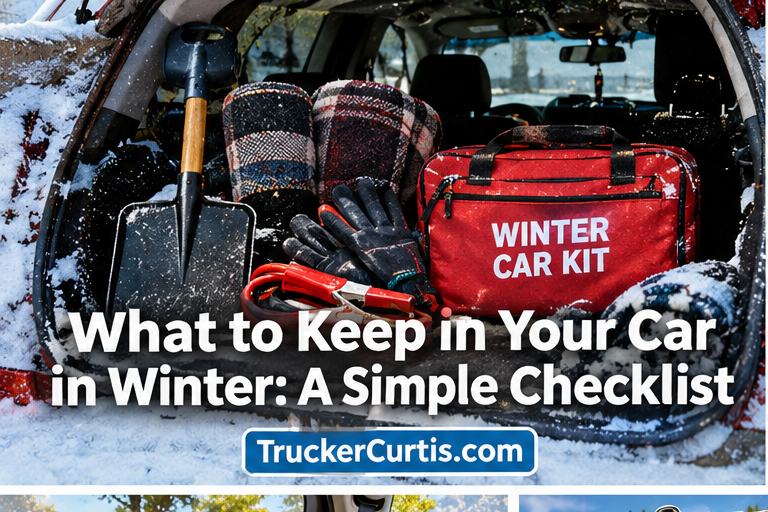
Winter car emergency kit checklist
☐ Ice scraper and snow brush
☐ Winter windshield washer fluid
☐ Compact snow shovel
☐ Sand or non-clumping cat litter for traction
☐ Jumper cables or a charged jump starter
☐ Tire pressure gauge and compatible portable inflator
☐ Flashlight and spare batteries
☐ First-aid kit and necessary medications
☐ Blankets, hats, gloves, dry socks and warm layers
☐ Water and nonperishable snacks
☐ Phone charging cable and charged power bank
☐ Reflective triangles or another visible emergency signal
☐ Tire chains or traction mats where appropriate and permitted
Keep the items you may need immediately within reach. A kit buried beneath everyone's luggage won't be much help on the shoulder.
Clear the glass before you go
Ice scraper and snow brush
Choose a scraper that feels solid in your hand and a brush long enough to reach the center of the windshield and roof. Clear all windows, mirrors, headlights, taillights and vehicle sensors. Snow flying off your roof can create trouble for the next driver.
Long-handled ice scraper and snow brush. Look for a comfortable grip, durable scraper edge and enough reach for your vehicle.
Winter washer fluid
Summer washer fluid may not be suitable for freezing conditions. Switch to a winter-rated product before temperatures drop, and top off the reservoir. Worn wiper blades can smear slush rather than clear it, so replace them if they're streaking.
Give yourself a way to get unstuck
Folding snow shovel
A compact shovel helps clear snow from around tires and the exhaust pipe. Metal edges may damage nearby trim or tires, so work carefully. A folding design saves space in smaller cars.
Folding snow shovel. Prioritize a sturdy handle and a compact stored size.
Traction materials
A bag of sand or non-clumping cat litter may improve traction on slippery ground. Traction mats can be useful too. Neither replaces winter tires or careful judgment. Check whether your region requires or permits chains and make sure any chains fit your tires and vehicle.
Traction mats. Choose a size and load rating suitable for your car; read the maker’s instructions.
If you carry a tow strap, know the vehicle's approved recovery points and limits. Improvised towing can be dangerous. When in doubt, call roadside assistance.
Get the Trucker Curtis Sunday Roundup
Road stories, everyday laughs, useful travel and vehicle tips, and practical finds in one free Sunday email.
Power and tires
Jump starter or jumper cables
A cold, weak battery can end a trip before it begins. Jumper cables are useful when another vehicle and someone who knows the procedure are available. A charged portable jump starter gives you another option, provided it is compatible with your engine and battery.
Portable jump starter. Check vehicle compatibility, clamp design and the manufacturer’s storage and charging instructions.
For more details, read the Portable Jump Starter for Winter: 9 Things to Check guide.
Tire gauge and portable inflator
Cold weather often reveals tires that were already underinflated. Measure pressure when the tires are cold and use the vehicle's door-jamb placard, not the maximum printed on the tire sidewall. A compact inflator can help top up a tire that is otherwise safe to drive on. It cannot make a damaged tire safe.
Portable tire inflator. Look for a readable display, appropriate pressure capability, hose reach and power-source compatibility.
See the Portable Tire Inflator for Winter: What to Check Before Buying guide and what to do about a Tire Pressure Light On in Cold Weather? Check This Before Buying Parts.
Tire repair basics and phone power
A gauge, valve caps and the tools specified by your vehicle are useful. Some sealants can interfere with tire-pressure monitoring systems or have other limitations; check the product and vehicle instructions before using them. The Road Trip Tire Emergency Kit: 10 Things to Pack Before You Leave explains the bigger picture.
Pack a charging cable that works in your car and a charged power bank. If your phone is charging slowly in the car, check the cable and power adapter before the trip. For camping-style outings, compare a Portable Power Station for Road Trips: 8 Things to Check.
Power bank and LED flashlight. A charged power bank supports communications; a flashlight helps with visibility without relying on your phone battery.
Stay warm and visible if you get stranded
Keep blankets, warm hats, gloves, dry socks, a first-aid kit, water, snacks and essential medicines on board. Bring a flashlight and reflective warning devices. Wear layers to retain body heat and conserve your phone battery for communication.
Critical safety: If you are stranded in severe winter weather, generally stay with the vehicle unless remaining there is unsafe. Clear snow away from the exhaust pipe before running the engine. To reduce carbon-monoxide risk, the National Weather Service advises running the engine for about 10 minutes each hour, with a window opened slightly for ventilation. Never run an engine in an enclosed space. If exhaust can’t be kept clear, do not run it. Call emergency services when needed. NHTSA and the National Weather Service provide further guidance.
Emergency blankets and warm layers. Choose supplies that work without vehicle power; a heated blanket is not a substitute for safe heating practices.
The five-minute winter check before leaving
Look at the tires and check their cold pressure, inspect wipers and lights, verify washer fluid and antifreeze, and make sure the heater and defroster work. Check the battery if starting has become sluggish. Keeping the fuel tank relatively full gives you more options if traffic stops. If the windshield keeps fogging, see how to clear a foggy windshield.
Printable checklist and more road-trip help
Save the quick list above, or use our road trip packing list printable and add the winter items. Explore more road trip gear worth the money and get new checklists by email.
Winter car kit FAQ
What should I keep in my car in winter at all times?
At minimum, pack a scraper, warm clothing, blanket, flashlight, charger, water, snacks, first-aid supplies and basic tire and battery equipment. Add traction and snow-clearing gear for your region.
How do I stay warm in my car if the heat stops?
Wear dry layers, cover exposed skin, use blankets and stay sheltered from wind. Follow carbon-monoxide precautions if running the engine and get help when conditions are dangerous.
Do I need a jump starter or are cables enough?
Cables can work when a suitable second vehicle is available. A compatible, charged jump starter is more independent, but it still requires safe use.
Where should I store the kit?
Store tools securely in the trunk or cargo area, but keep essential warm layers, a light and a charger accessible from the cabin.
Some links on this website may be affiliate links, which means we may earn a small commission when you make a purchase, at no extra cost to you. As an Amazon Associate I earn from qualifying purchases. Your support helps keep Trucker Curtis going, and we truly appreciate it!


Comments