Road Trip Tire Emergency Kit: 10 Things to Pack Before You Leave

Disclosure: This article contains affiliate links. If you purchase through these links, we may earn a commission at no additional cost to you.
A tire problem can turn an easy weekend drive into a long wait on the shoulder. The best road trip tire emergency kit is not the biggest box of gadgets. It is a small collection of tools that match your vehicle, plus a plan for situations you should not attempt to handle yourself.
Before buying anything, check what your car already carries. Some vehicles have a spare tire and jack. Others use a sealant-and-inflator kit, and some require roadside assistance for certain tire failures. Your owner's manual is the starting point.
What belongs in a road trip tire emergency kit?
These 10 items cover the basics for everyday cars, SUVs and pickups. They do not make an unsafe shoulder safe, and no consumer kit can repair every tire failure.
1. A tire-pressure gauge you can read
A simple, accurate gauge helps you check pressure when the tires are cold. Use the vehicle manufacturer's recommended pressure on the driver's door placard or in the owner's manual, not the maximum pressure molded into the tire sidewall. Check the spare too, if your vehicle has one.
For a deeper explanation of cold-weather pressure changes, read Tire Pressure Light On in Cold Weather? Check This Before Buying Parts before replacing a sensor or buying more equipment.
2. A portable tire inflator with the right power connection
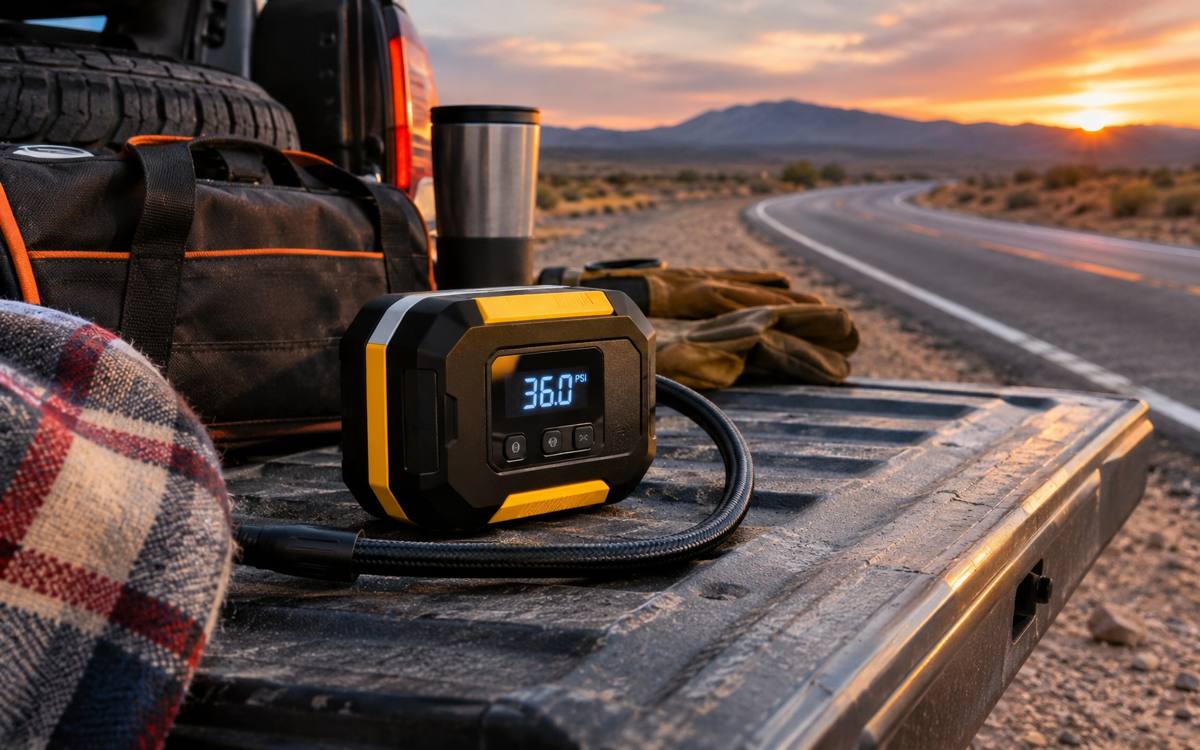
A portable tire inflator with a readable pressure display and a power connection compatible with your vehicle can be useful for topping up a low tire before a trip. Compare the required voltage, duty cycle, hose reach and maximum supported tire size. A small inflator may struggle with large pickup tires or repeated inflation jobs.
An inflator is not a cure for a puncture or structural tire damage. If the tire is visibly damaged, losing air rapidly or has been driven flat, do not assume adding air makes it safe to drive.
Our buying checklist, Portable Tire Inflator for Winter: What to Check Before Buying, explains the features worth comparing before you spend money.
3. The correct spare tire or manufacturer-approved repair kit
If you have a spare, confirm that it is properly inflated, accessible and compatible with the vehicle. Check whether the spare is temporary-use only and follow its speed and distance restrictions. If your vehicle has a sealant kit instead, inspect its expiration date and instructions. Sealant may not work on large punctures, sidewall damage or a tire that has separated from the rim.
4. The factory jack, lug wrench and wheel-lock key
A missing wheel-lock key can make a simple tire change impossible. Confirm the jack and wrench are present and designed for your vehicle. Practice locating the manufacturer's approved lift points while parked safely at home. Never crawl under a vehicle supported only by a jack.
5. A bright flashlight or headlamp
A hands-free headlamp can help you find a tool or read a label in low light. Keep fresh batteries or a charged light ready. A phone flashlight is a useful backup, but it is harder to hold while using both hands.
6. Work gloves and a clean kneeling pad
Tire work can involve sharp metal, road grit and cold surfaces. Gloves and a small pad are inexpensive ways to protect your hands and knees during safe inspections. They are not a reason to attempt roadside work where traffic is too close.
7. Reflective clothing and vehicle warning supplies
A reflective vest can improve visibility when you must exit a vehicle in a safe location. Follow local rules and your vehicle manual for warning devices. Do not step into moving traffic to set out a triangle, and do not stand behind the vehicle near an active lane.
8. A charged phone and backup charging cable
Save your roadside-assistance number, vehicle information and insurance contact before leaving. A working charging cable and compatible car charger can matter more than another specialty gadget. In areas with weak coverage, download maps and tell someone your route.
9. A compact first-aid kit and drinking water
A basic first-aid kit, water and any necessary personal supplies help with a long delay. Keep medications stored according to their labels, especially in hot or freezing vehicles. These items support comfort; they do not replace emergency medical help.
10. A written roadside plan
Know whether your vehicle includes roadside service through insurance, a warranty, an auto club or a separate plan. Save the phone number somewhere you can reach without mobile data. A printed card with the vehicle's year, model, tire size and important contacts can save time when you are stressed.
When NOT to change a tire yourself
If you are stopped on a narrow shoulder, around a blind curve, in heavy traffic, on soft or sloped ground, or in severe weather, prioritize getting people out of danger and contacting appropriate assistance. Pull as far from traffic as safely possible, activate hazard lights, and follow local emergency guidance. Do not attempt a tire change beside fast-moving traffic simply because you brought the tools.
A puncture in the tread area may sometimes be professionally repairable after the tire is removed and inspected. Sidewall damage, bulges and many run-flat conditions require replacement. A temporary plug or sealant is not a substitute for an inspection by a qualified tire professional.
How to check your road trip tire emergency kit before leaving
A week before the trip, check the vehicle's tire-pressure placard, inspect tread and sidewalls, measure cold tire pressure and inspect the spare. Test your inflator at home following its instructions. Check that the jack, lug wrench and wheel-lock key are in the vehicle. Charge your light and phone backup, and confirm roadside coverage.
Then pack the kit where you can reach it without unloading everything. A labeled soft bag or small organizer often works better than a pile of loose tools rolling around the trunk.
For the rest of your preparation, use Fall Day Trip Checklist: Five Checks Before You Leave to check maps, daylight, closures and supplies.
Buying advice: avoid paying twice for the same job
You do not need every product labeled 'emergency.' Start with the tools your vehicle is missing. A tire-pressure gauge and compatible inflator may be practical purchases, but a professional roadside plan can be the better investment if you cannot safely lift or change a wheel.
If you also want a backup for a weak vehicle battery, compare it separately from tire equipment. A jump starter will not fix a flat, and a tire inflator will not start a dead battery.
Our separate guide, Portable Jump Starter for Winter: 9 Things to Check, covers battery compatibility and cold-weather storage.
Frequently asked questions about a road trip tire emergency kit
Can a portable inflator fix a flat tire?
No. An inflator adds air but does not repair a puncture, sidewall cut or internal damage. A tire that repeatedly loses air needs proper inspection.
Do I need a spare tire if I have roadside assistance?
Not every vehicle comes with a spare. Roadside assistance can help, but service availability, towing options and replacement-tire access vary by location. Check your vehicle equipment and plan limitations before traveling.
What tire pressure should I use on a road trip?
Follow the vehicle manufacturer's cold tire-pressure recommendation for your load and tire configuration. The number printed on the tire sidewall is not the normal inflation target.
What is the single most useful first purchase?
For many drivers, a reliable tire-pressure gauge is an inexpensive starting point because it helps with routine checks before a problem develops. After that, choose equipment based on your vehicle and the kind of trips you actually take.
The bottom line
A useful road trip tire emergency kit is about preparation, not pretending you can fix anything on the shoulder. Check what came with your vehicle, pack a few practical essentials, and know when calling for help is the safest choice.
Some links on this website may be affiliate links, which means we may earn a small commission when you make a purchase, at no extra cost to you. As an Amazon Associate I earn from qualifying purchases. Your support helps keep Trucker Curtis going, and we truly appreciate it!
Comments