Car Stuck in Snow? What to Do Now and How to Get Out
Nobody plans to get stuck. The snow does not check your schedule.
A short drive in cold weather can turn into a long wait. When a car is stuck in snow, the first job is not a fancy recovery move. It is staying safe, staying visible and keeping exhaust out of the cabin. This is the "right now" guide. For the packing list, see our winter car emergency kit post.
Quick answer: Stay with the car unless help is clearly close. Call for help, clear the tailpipe before you run the engine, crack a window a little and make the car easy to spot. The National Weather Service says to run the motor about 10 minutes each hour for heat. Then, if it is safe, dig around the tires, add traction and rock gently. If nothing moves, stay put and stay warm.

Stay with the car, make it visible, then try to get out
The first rule is boring: stay with the car. The National Weather Service says that if you leave the vehicle in wind-driven snow and cold, you can become disoriented quickly. OSHA says not to leave to search for help unless help is visible within about 100 yards. Call 911 or roadside help when you can. Mass.gov says to describe your location and stay on the line until you know what happens next. Clear the exhaust, make the car visible and only then dig and rock.
Step 1: Stop, breathe and look around
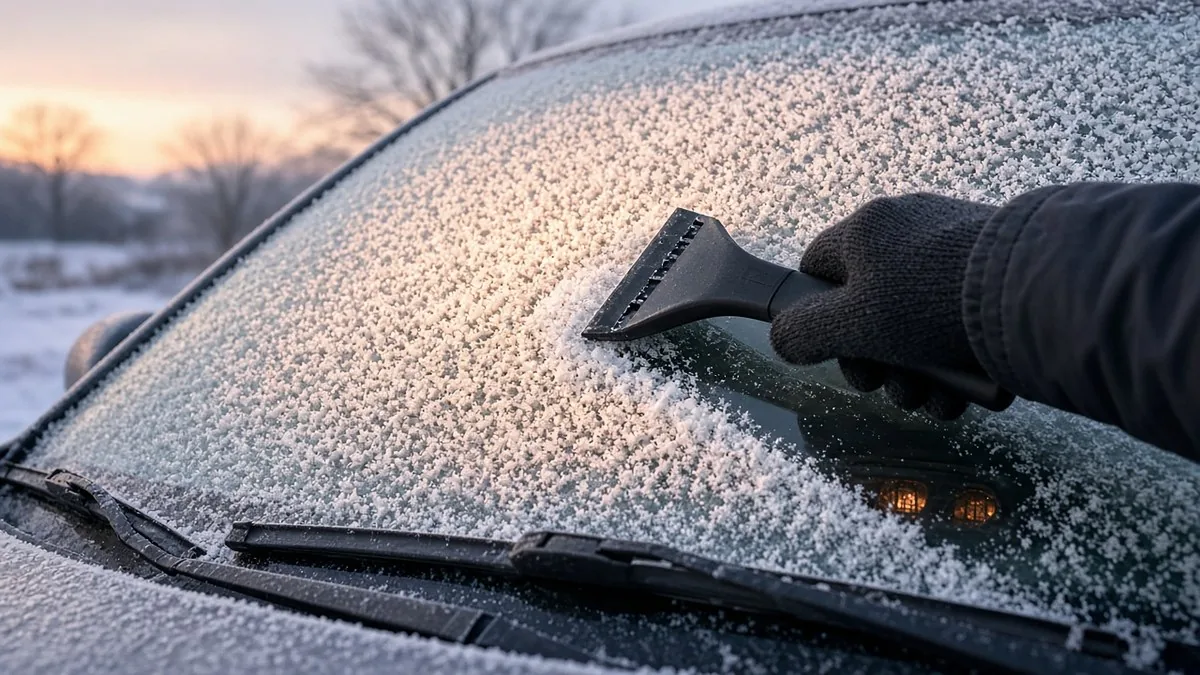
Put the car in Park (or in gear with the parking brake set on a manual), turn on the hazard lights and look around before you dig. Check traffic, ditches and deep drifts. If you stopped because you could not see, clear the glass first. Our guide on how to defrost a windshield covers a safe way to get visibility back. Tell someone your rough location if you have a signal.
Step 2: Clear the tailpipe before you run the engine
Before you idle for heat, clear snow from the exhaust pipe. NHTSA says to clear any snow from the exhaust and run the car only sporadically, just long enough to stay warm. The National Weather Service says to clear the exhaust pipe, open a window a little for fresh air and run the motor about 10 minutes each hour. OSHA and Mass.gov give the same carbon monoxide warning: a plugged exhaust can push deadly gas into the cabin. Do not run the engine in an enclosed space. If you cannot keep the tailpipe clear, do not run it.
Step 3: Try to get unstuck (what usually works)
Only try this when you are out of live traffic and it is safe to step outside. Dress for the cold and take short breaks. OSHA warns that hard work in the cold, such as heavy shoveling or pushing a vehicle, can strain the heart.
Dig out around the tires
Clear snow from in front of and behind the drive wheels, and from under the body where it is packed tight. A compact shovel helps. Dig a path in the direction you want to roll, and clear the lights so you stay visible.
Add traction under the drive wheels
NHTSA's winter stock list includes sand or kitty litter for when a vehicle gets stuck. Place a thin layer under the drive tires in the direction you will roll. Traction mats work the same way when you have them. Put the material under the wheels that pull (front, rear or all-wheel drive).
Gentle rocking, and when to stop
Straighten the steering, ease into a low gear or Drive and try a light, steady roll onto the traction. If the tires spin, stop. Dig a little more, add material and try again with less throttle. Hard spinning digs you deeper and can overheat a transmission or clutch. If the car has not moved after a few careful tries, stop and call for a tow or wait for help.
If it will not move: stay put and stay warm
When the car will not budge, shift from "get out" to "stay safe." Stay in the vehicle. Run the engine only in short spells as NWS describes (about 10 minutes each hour), with the exhaust clear and a window cracked. Turn the dome light on at night while the engine runs. Wear dry layers. Mass.gov suggests loosening tight clothes, changing position often and rubbing hands and feet. OSHA adds: clap, move arms and legs, stay awake and use blankets, newspapers, maps or removable car mats for insulation. Eat and drink if you have supplies; NWS notes that food helps the body make heat and cold air is dry.
How to make your car easy to find
Make the car a signal, not a white blob in a white field.
- Tie a bright cloth, preferably red, to the antenna or a door (NWS and Mass.gov).
- Turn on the dome light at night when the engine is running (NWS, OSHA, Mass.gov).
- After the snow stops, raise the hood to show you need help (NWS and OSHA).
- Keep hazard lights on when it is safe and the battery allows it.
NHTSA also says to put bright markers on the antenna or windows and keep the interior dome light on. Set out reflective triangles only when you can do it without stepping into traffic.
Free every Sunday
Get the free Sunday Roundup
Trucking headlines, road stories, useful gear finds and a few laughs, in your inbox every Sunday.
Keep your phone alive
Your phone is how you call for help and share a location. Turn down the screen, close unused apps and use low power mode. Send a short location text when you have a signal. Keep the phone warm inside your coat if the cabin is freezing, because cold drains batteries faster.
A charged portable power bank in the glove box or console is one of the simplest ways to keep the phone alive when the car is off. Pair it with a cable you have already tested. For what to check before you buy one, see our power bank guide. NWS also says not to leave home without a fully charged mobile phone, a car charger and an emergency supplies kit.
What not to do
- Do not wander away from the car in a storm unless help is clearly close. NWS and OSHA warn that blowing snow can erase your sense of direction fast.
- Do not run the engine with a buried tailpipe, and do not idle in an enclosed space.
- Do not overexert. OSHA and Mass.gov warn against heavy shoveling or hard pushing that risks a heart attack or soaks your clothes in sweat.
- Do not spin the tires until they smoke. You dig deeper and you can damage the drivetrain.
- Do not eat handfuls of snow for water. NWS says eating unmelted snow lowers body temperature.
- Do not ignore a weak battery. A charged portable jump starter helps after a long cold wait if it matches your vehicle. See our portable jump starter guide.
A small kit that makes this much easier
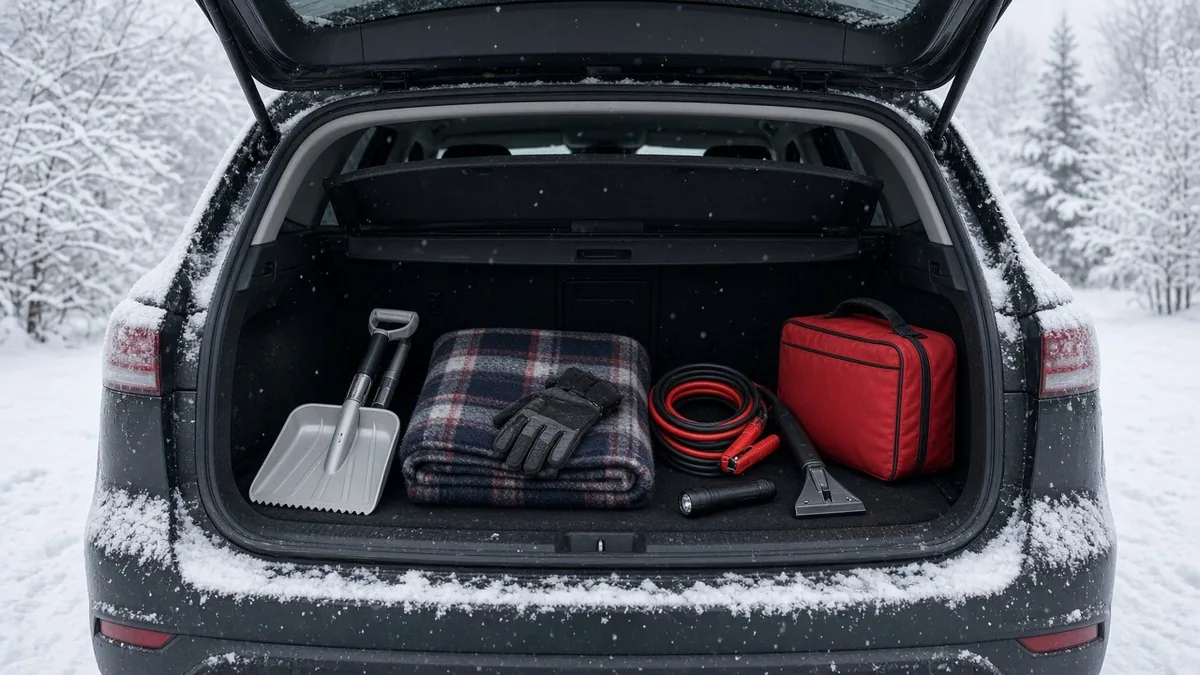
You do not need a trunk full of gadgets. A compact shovel, a blanket, warm layers, water, snacks, a first-aid kit and sand, kitty litter or traction mats cover most "stuck right now" problems. A flashlight helps you clear the tailpipe without burning phone battery. A long-handled ice scraper and snow brush clears glass, lights and the roof before you try to roll. NHTSA's list also names jumper cables, warning devices, blankets, water, food, a cell phone and a car charger.
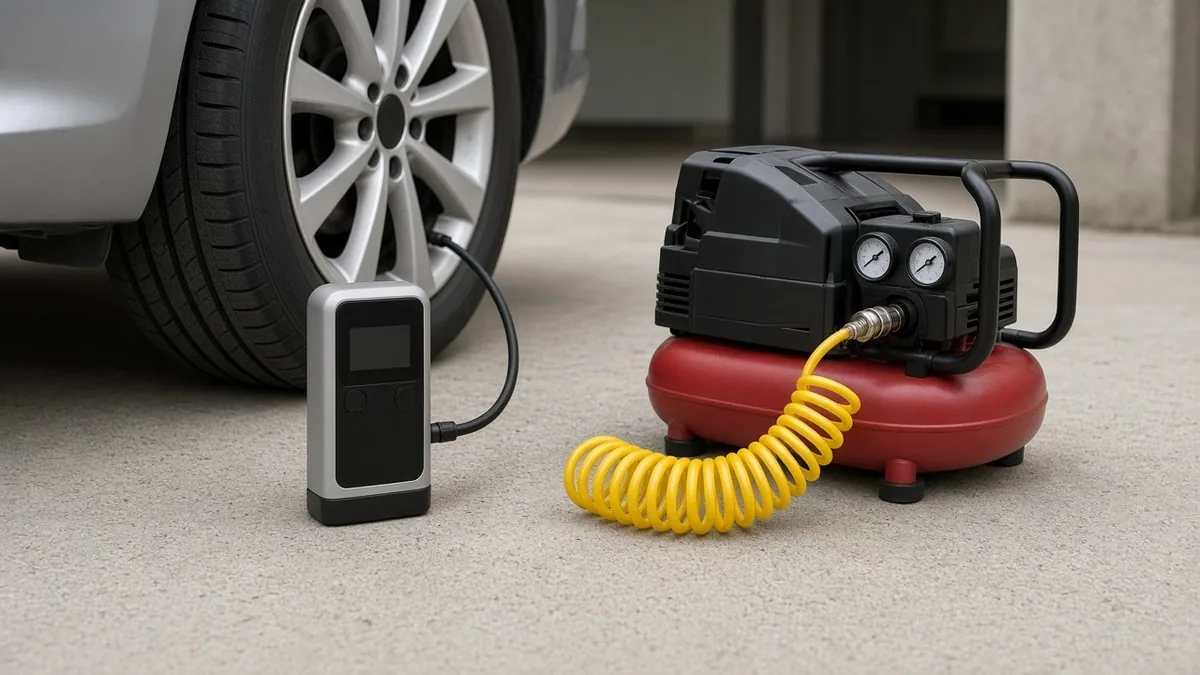
Cold weather drops tire pressure. If a dug-out tire looks soft, check it with a useful tire pressure gauge against the door-jamb placard, not the sidewall number. See our post on a tire pressure light on in cold weather. This post is the action plan; the winter car emergency kit guide is the packing list.
Gear mentioned in this post
- Portable power bank: keep the phone charged when the car is off.
- Flashlight: clear the tailpipe and check around the tires without draining the phone.
- Portable jump starter: useful after a long cold wait; match it to your vehicle and keep it charged.
- Long-handled ice scraper and snow brush: clear glass, lights and roof snow before you try to move.
- Useful tire pressure gauge: check cold pressure against the door-jamb placard if a tire looks soft.
FAQ
What should I do if my car is stuck in snow?
Stay with the car unless help is clearly close. Call for help, clear the tailpipe, make the car visible, then dig, add traction and rock gently. If it will not move, stay put and stay warm.
Should I stay in my car if I am stuck in a snowstorm?
Yes, in most cases. The National Weather Service says to stay in the vehicle because wind-driven snow and cold can disorient you fast. OSHA says not to leave unless help is visible within about 100 yards.
How often can I run the engine to stay warm?
The National Weather Service says to run the motor about 10 minutes each hour for heat, with a window open a little for fresh air. Clear the exhaust pipe first.
Why clear the tailpipe when stuck in snow?
Snow can block the exhaust and push carbon monoxide into the cabin. NHTSA, NWS, OSHA and Mass.gov all warn you to keep the exhaust clear and crack a window for ventilation.
What can I put under my tires for traction?
NHTSA lists sand or kitty litter for when a vehicle gets stuck. Traction mats can help too. Dig out around the drive wheels first, then place the material under those tires.
Sources and image note
Sources reviewed November 4, 2026: National Weather Service winter storm safety; NHTSA Winter Weather Driving Tips; OSHA Winter Weather Hazards/Precautions; Mass.gov stranded-in-winter guidance. The header is an AI-generated editorial illustration, not a real customer incident or evidence of product testing.
Related articles you may find useful
Read next: Winter Car Emergency Kit: What to Keep in Your Car in Winter
Read next: Portable Jump Starter for Winter: What to Check
Sign up for the Sunday Roundup to get the free printable Winter Roadside Emergency Checklist, plus weekly road tips, stories and gear picks.