12V Cooler for Car Trips: How to Choose the Right One
A cooler that plugs into the car sounds simple, until you ask what it does to the battery.
Good road trip food is mostly about not buying the third bag of gas station chips. A 12V cooler helps, but these coolers are not all built the same way, and the differences matter once the engine is off or the day turns hot. Here is what to check before you buy.
Quick answer: a thermoelectric 12V cooler keeps already cold drinks and snacks cool on short trips in mild weather. A compressor 12V fridge holds the temperature you set, even on hot or long trips, and can freeze, but it costs more and weighs more. Before you buy, check the power draw, whether it has a low-voltage battery cut-off and whether it fits where you plan to put it.
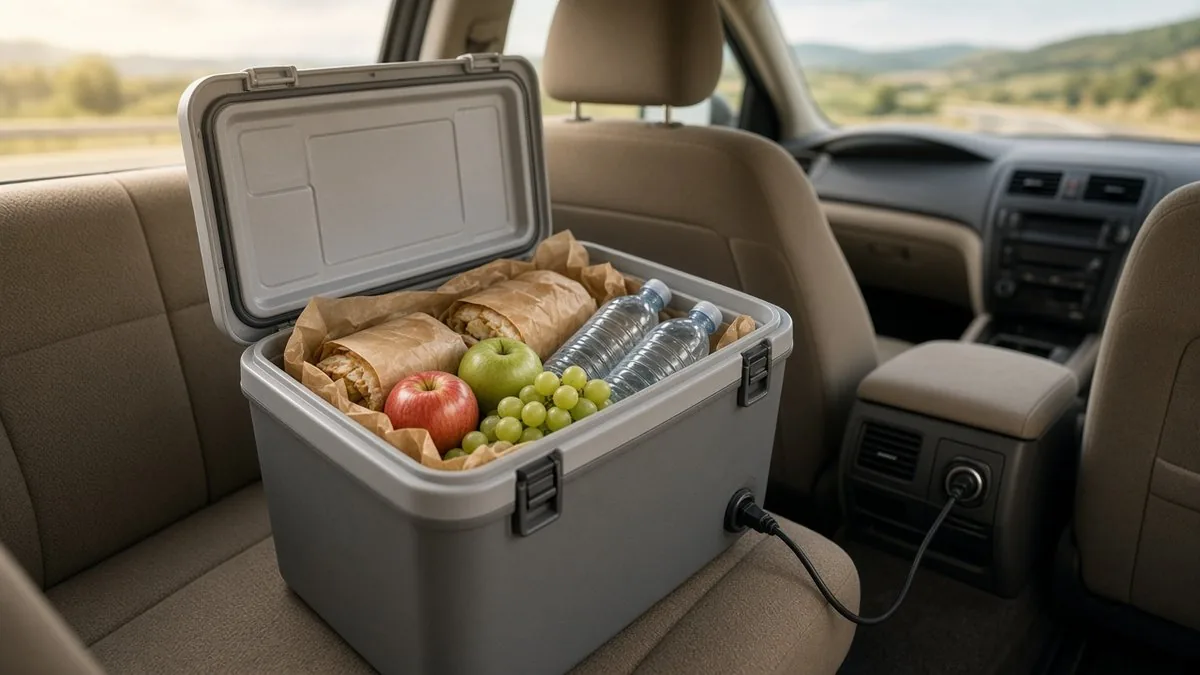
Thermoelectric for short mild trips, compressor for hot or long ones
If your trips are short and the cooler rides in the air-conditioned cabin, a thermoelectric cooler can do the job. For hot country, several days of groceries or anything frozen, a compressor model fits better. Dometic, which makes both kinds, says on its support site that longer periods of use, such as more than two days, call for compressor technology because it uses less energy.
What a 12V cooler actually does
A 12V cooler has its own cooling system and runs on your car's 12-volt outlet, the socket that used to hold the cigarette lighter. Many also come with a cord for a wall outlet. It cools without ice, which matters more than it sounds: as Car and Driver's tested guide puts it, ice melts, usually right into your snacks.
Thermoelectric vs compressor coolers
Thermoelectric coolers have no compressor and no refrigerant. Car and Driver describes them as solid-state cooling that moves heat through a metal plate. They are usually lighter and cheaper, and many can also keep food warm. The catch is that they cool relative to the air around them. The Igloo Versatemp that Car and Driver picked as its best thermoelectric cooler cools to 36 degrees F below the surrounding air. On a 70 degree day, that is about 34 degrees inside. On a 100 degree day in a hot trunk, it is about 64, which is not cold enough for food. Car and Driver advises skipping thermoelectric coolers in hot, dry places unless the cooler stays in the cabin.
Compressor coolers work like a home refrigerator. Car and Driver says they work at any outside temperature, hold a steady setting and can reach freezing. The trade-off is size, weight and price. In its tests, the 23 quart BougeRV compressor model reached 0.9 degrees F.
Will it drain your car battery?
Dometic's support site gives a clear example of the difference. A thermoelectric cooler drawing 47 watts uses about 3.92 amp-hours every hour it runs, or about 94 amp-hours in a day, because it never shuts off. A Dometic compressor cooler drawing 48 watts runs only part of the time once it is cold, and Dometic puts its use at under 1 amp-hour per hour, or under 24 in a day. BougeRV says the same thing about its compressor fridge: it stops once it reaches the set temperature and starts again when the inside warms by 2 to 3 degrees.
While you drive, the engine keeps the battery charged. The risk comes when the car is parked with the cooler still plugged in. Car and Driver warns that running a cooler for too long with the car off can drain the battery completely, and suggests checking whether a cooler turns off with the car or keeps drawing power.
A few habits help:
- Look for a low-voltage cut-off. Many compressor models shut themselves off before the battery gets too low. BougeRV's 23 quart model has a 3-stage battery monitor.
- Use the right setting. Dometic recommends its High or Medium battery protection setting when the cooler runs from your starter battery, and Low only when it runs from a separate accessory battery.
- Know your outlet. Check your owner's manual to see whether your 12V socket stays powered with the car off.
- Use other power when parked. For overnight stops, a separate power source is a safer bet than the car battery. Our portable power station guide covers what to check.
Size and where it fits in the car
Car and Driver's advice is to match the size to the trip length and the number of people, while leaving room for passengers and cargo. Measure the spot first, then compare it with the cooler's outside size, not just its quart number. For example, BougeRV lists its 23 quart fridge at 22.7 by 12.6 by 13.0 inches outside, with an inside space of 13.8 by 9.8 by 9.8 inches, and a weight of about 21 pounds empty.
Free every Sunday
Get the free Sunday Roundup
Trucking headlines, road stories, useful gear finds and a few laughs, in your inbox every Sunday.
Two more checks:
- Cord length. The cord has to reach the 12V socket. Car and Driver notes this can limit where you put a cooler in an SUV cargo area or a pickup bed.
- Number of outlets. Some older and smaller vehicles have only one 12V socket. If a phone charger or dash cam already uses it, you may need a splitter.
For truck drivers, check the voltage too. The BougeRV 23 quart comes with a 12V/24V DC cord, but not every cooler does, so check the specs if the vehicle runs on 24 volts.
12V cooler vs a regular cooler with ice
A regular cooler with ice is cheaper, needs no power and works fine for a day out. So does a simple lunch bag with frozen ice packs. A 12V cooler starts to make sense when you travel often, take longer trips or are tired of fishing soggy sandwiches out of meltwater.
One tip from Car and Driver: pre-chill the cooler. If it comes with a cord for a wall outlet, plug it in the night before so it is already cold, then load it with food that is already cold. It uses less power to keep things cold than to cool them down.
Food safety basics on the road
A powered cooler only helps if it keeps food cold enough. The USDA says bacteria grow rapidly between 40 and 140 degrees F, so perishable food should stay at 40 degrees F or below.
The USDA's cooler tips are simple:
- Pack perishable food straight from the refrigerator or freezer. Meat and poultry can go in frozen.
- Keep an appliance thermometer in the cooler and make sure it reads 40 degrees F or below.
- A full cooler stays cold longer than a half-empty one.
- Wrap raw meat securely and keep it at the bottom so juices do not drip on other food.
- Keep drinks in a separate cooler if you can, since that lid gets opened the most.
- After eating, put perishable food back in the cooler within 2 hours, or within 1 hour when it is above 90 degrees F outside.
This matters most with a thermoelectric cooler on a warm day, since its inside temperature rises with the air around it.
What to pack in it
Simple food that holds up well cold travels best:
- Sandwiches or wraps in sealed containers
- Washed whole fruit such as apples and grapes
- Cheese sticks and yogurt
- Cut vegetables with hummus
- Hard-boiled eggs
- Bottled water, plus a refillable bottle
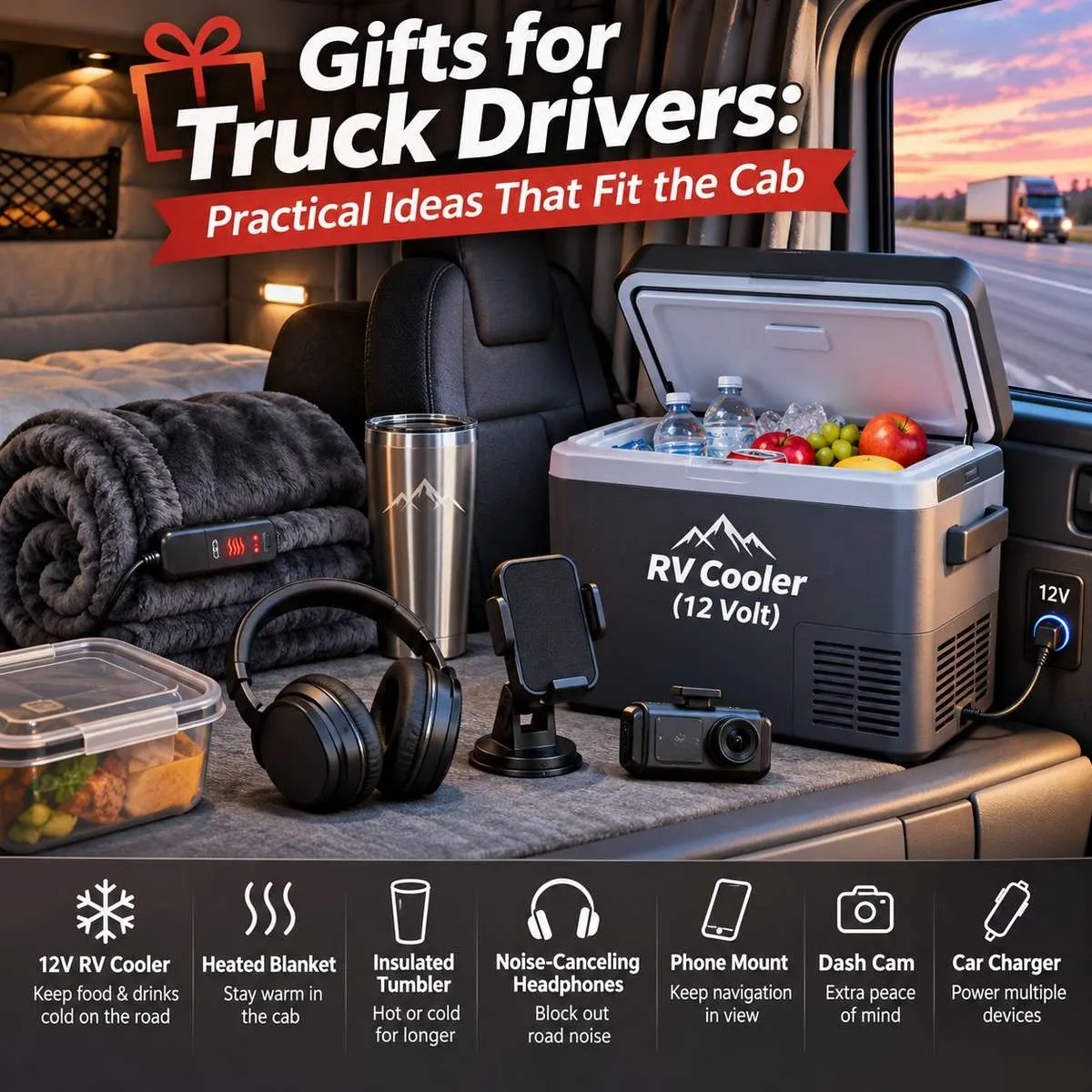
For the rest of the car, our road trip packing list and our guide to car accessories for long road trips cover the basics, and a 12V cooler also shows up in our gifts for truck drivers ideas.
Gear mentioned in this post
- Portable 12V cooler: worth it for regular road trips. Check its dimensions, usable capacity and power draw against your vehicle's outlet first.
- Insulated lunch bag: the simple option for day trips with frozen ice packs and no power needed.
- YETI Rambler 26 oz Bottle: a refillable bottle for water so the cooler can hold more food.
FAQ
Are 12V coolers worth it for road trips?
They can be if you travel often and want cold food without buying ice. For a short day trip, a regular insulated cooler or lunch bag with ice packs is often enough. The longer and hotter the trip, the more a compressor model earns its price.
Will a 12V cooler drain my car battery?
It can if it runs while the engine is off. A thermoelectric cooler draws power the whole time it is on, while a compressor fridge cycles on and off. Look for a low-voltage cut-off and set it to the level the maker recommends for a starter battery.
What is the difference between thermoelectric and compressor coolers?
A thermoelectric cooler has no compressor or refrigerant and can only cool a set number of degrees below the air around it. A compressor cooler works like a home refrigerator, holds the temperature you set and can freeze, but it is usually bulkier and costs more.
Can a 12V cooler keep food frozen?
A compressor model can. Car and Driver notes that thermoelectric coolers cannot freeze food, while compressor coolers can reach freezing temperatures. BougeRV lists a range of -7 to 50 degrees F for its 23 quart compressor fridge.
What should I pack in a car cooler?
Pack food straight from the refrigerator, keep raw meat wrapped and at the bottom, and put drinks in a separate cooler if you can. The USDA says to keep perishable food at 40 degrees F or below and to check it with an appliance thermometer.
Sources and image note
Sources reviewed November 13, 2026: Car and Driver tested guide to electric car coolers; Dometic on cooler energy use; Dometic battery protection settings; BougeRV 23 quart portable fridge; USDA on how to pack a cooler. The header is an AI-generated editorial illustration, not a real customer incident or evidence of product testing.
Related articles you may find useful
Read next: Car Accessories for Long Road Trips: What's Worth Packing
Read next: Portable Power Station for Road Trips: 8 Things to Check
Road trip food and gear ideas arrive in the free Sunday Roundup.